
MICRODOSING OBLIVION : ON APOCALYPSE MEDIA AS A COPING MECANISM

I’ve recently begun the painstaking task of quitting SSRIs, and with the chemicals leaving my bloodstream, a surge of emotions overtakes me for the first time in almost ten years: sorrow, joy, yearning, bouts of uncontrollable sobs over the mundane. To soothe and distract my freshly spinning brain, I’ve come to baking copious amounts of sweets and watching my favourite genre of media: end-of-the-world/apocalypse grand epics, tales of reconstructing society after the unspeakable has happened.
The apocalypse fascinates us because it is inevitable. Every day can feel like the end for us, prone to depression, and seeing other people die in gruesome ways can strangely feel like a BDSM-like coping mechanism. Perhaps it’s the idea of a clean slate, something wholly new to work with. There’s no time to think about mortgages, relationships, midlife crises and what to eat tonight when you have to fashion a knife out of nuclear waste.
Threads (1984) was originally produced as a TV film in the height of the Cold War, depicting the horrors of the atomic bomb and its devastating aftermath. Set in the bleary town of Sheffield, the film follows a couple, Ruth Beckett and Jimmy Kemp, who plan to elope after learning of Ruth’s unintended pregnancy. In the opening scenes, vignettes of everyday life unfold at a languid pace, while tensions escalate between the Soviet Union and the United States. Conversations are cut with updates of the unfolding conflict, rapidly quickening and resulting in one of the most shocking sequences I’ve had the displeasure to watch. As deafening civil defence sirens resound, Jimmy notices a mushroom cloud in the distance. The tone considerably switches from there: petrifying scenes of radiation poisoning, ruthless killings and hopelessness. A decade later, Britain’s society has dropped to 4 million, resembling a Middle Ages-esque nation. Ruth dies in a straw bed alone, blinded by cataracts, survived by Jane, her daughter.
The epilogue of the Threads is arguably the bleakest outcome possible, and I’ve had to stare into the void for 20 minutes after watching it. In the absence of schooling and nuclear fetal exposure, children born after the Armageddon speak a primitive form of English and are taught using an 80s instructional video on an outdated television, powered by restricted steam power. Jane and two feral children are caught stealing food. While one of the boys is shot, Jane engages in a struggle for the provisions with the surviving child, which culminates in a vicious assault. In the last minutes of the movie, she gives birth in a makeshift health clinic. The nurse wraps the bloodied baby in a dirty sheet and hands it to a horrified Jane, who looks at it with terror and wails. The credits roll, and I contemplate my shocked reflection in the screen. It will take me several days to process what I just watched.
Threads’ muddied hues, garbled soundtrack and collages of ugly scenes are precisely what drew me in. It feels like microdosing life in the Eastern Bloc or passing a tattered coupon to the attending for rations. It’s a possibility our parents have been conditioned to since they were children. It’s ‘’Duck and Cover’’ drills in classrooms, Mikhail Gorbachev’s port-wine stain and tales of KGB spies. A situation no one in our generation thinks is probable, yet there’s currently 542K members on r/collapse, and you can readily buy apocalypse survival kits on Amazon. The commodification of the end of the world is at our doors, and it can be here in less than 48 hours if you pay for quick shipping.
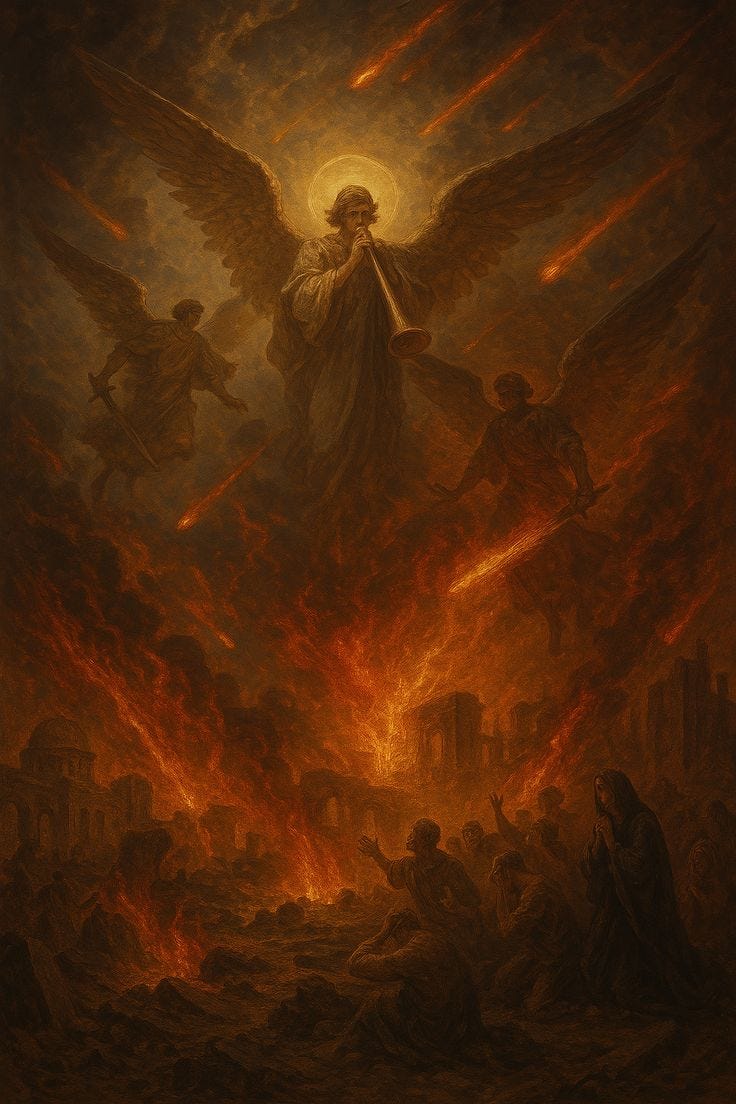
In what feels like a micro-trend, AI-slop of Armageddon movies, Kathryn Bigelow’s A House of Dynamite (2025) was released with tepid reviews, direct to Netflix in October. Prepare to be edged for 1h52, with mediocre performances by Idris Elba as a simulacrum of Barack Obama and Rebecca Ferguson, who looks like she just learned what DEFCON stands for. An SBX-1 radar detects a ballistic missile, presumably headed to the continental USA. Over the next two hours, incompetent task forces scramble to deescalate the incoming cataclysm. Bigelow chooses to end the movie on a cliffhanger: Does the apocalypse actually happen? There’s nothing like the sensation of being infantilized by your cinematic choices. The whole ordeal was akin to a corporate-training video in a carpeted office park.
To close, I’ll leave you with three apocalypse movies, one TV show and one book you should consume:
Movies:
Testament (1984)
On The Beach (1959)
When The Wind Blows (1986)
TV Show :
Station Eleven (2021) and its accompanying book by Emily St. John Mandel
Book :
Severance (2018) by Ling Ma